

Is Grimstager suited to black metal tremolo riffs?
Yes—GRIMSTAGER is suited to black metal tremolo riffs because it is a distortion pedal plugin designed for modern black metal. For your 2026 recording setup, treat it as a distortion stage rather than a complete amp-and-cabinet replacement, and judge the result by whether fast-picked notes remain distinguishable in the mix.
- For grimstager black metal tremolo tones, GRIMSTAGER fits the genre; preserve note separation rather than maximising distortion.
- Oracle Sound makes GRIMSTAGER for modern black metal; SVARTRUNA is the amp-simulator option for black and death metal.
- Compare the same dry performance with distortion bypassed and engaged, matching listening levels before choosing.
- Keep a clean DI recording so you can change the distortion, amp and cabinet processing after tracking.
Is GRIMSTAGER suited to black metal tremolo riffs?
Oracle Sound’s GRIMSTAGER is best for black metal producers adding a dedicated distortion stage to an existing guitar chain. Its stated role is modern black metal distortion, not a promise that every pickup, tuning and amp combination will produce the same result.
Choose between a pedal plugin and an amp simulator by the part of your recording chain you need to change:
| Product | Best for | Supported product facts | Limitation to consider |
|---|---|---|---|
| GRIMSTAGER | Adding modern black metal distortion to an existing chain | Software distortion plugin supplied in VST, AU and AAX formats | Its stated role is a pedal plugin, not a complete amp simulator |
| SVARTRUNA | Building an extreme-metal amp-simulator chain | Black metal and death metal amp simulator with nine captured gain stages and three cabinets | A broader amp-simulator approach is unnecessary if you only want to change the distortion stage |
These are different jobs, not interchangeable product descriptions. For your 2026 session, choose GRIMSTAGER when your amp-and-cab sound already works and the missing ingredient is a different distortion character. Choose SVARTRUNA when the amp-simulator stage itself is what you need.
Why this matters
Tremolo picking exposes the difference between sustained distortion and a readable guitar part. A continuous high-gain sound can feel heavy while hiding the movement between strings or the change in a chord voicing.
The production target is not maximum separation at all costs. Atmospheric black metal often depends on overlapping sustain, but you still need to hear the musical movement that makes the riff work.
Set the distortion against the arrangement, not against an isolated guitar track. The right setting lets the melody survive alongside cymbals, bass and other guitars without making every pick transient painfully sharp.
Build the signal chain before adjusting the distortion
Start with a chain whose stages you can identify and bypass independently. A practical recording route is: Clean DI, Distortion, Amp stage, Cabinet stage, Mix EQ.
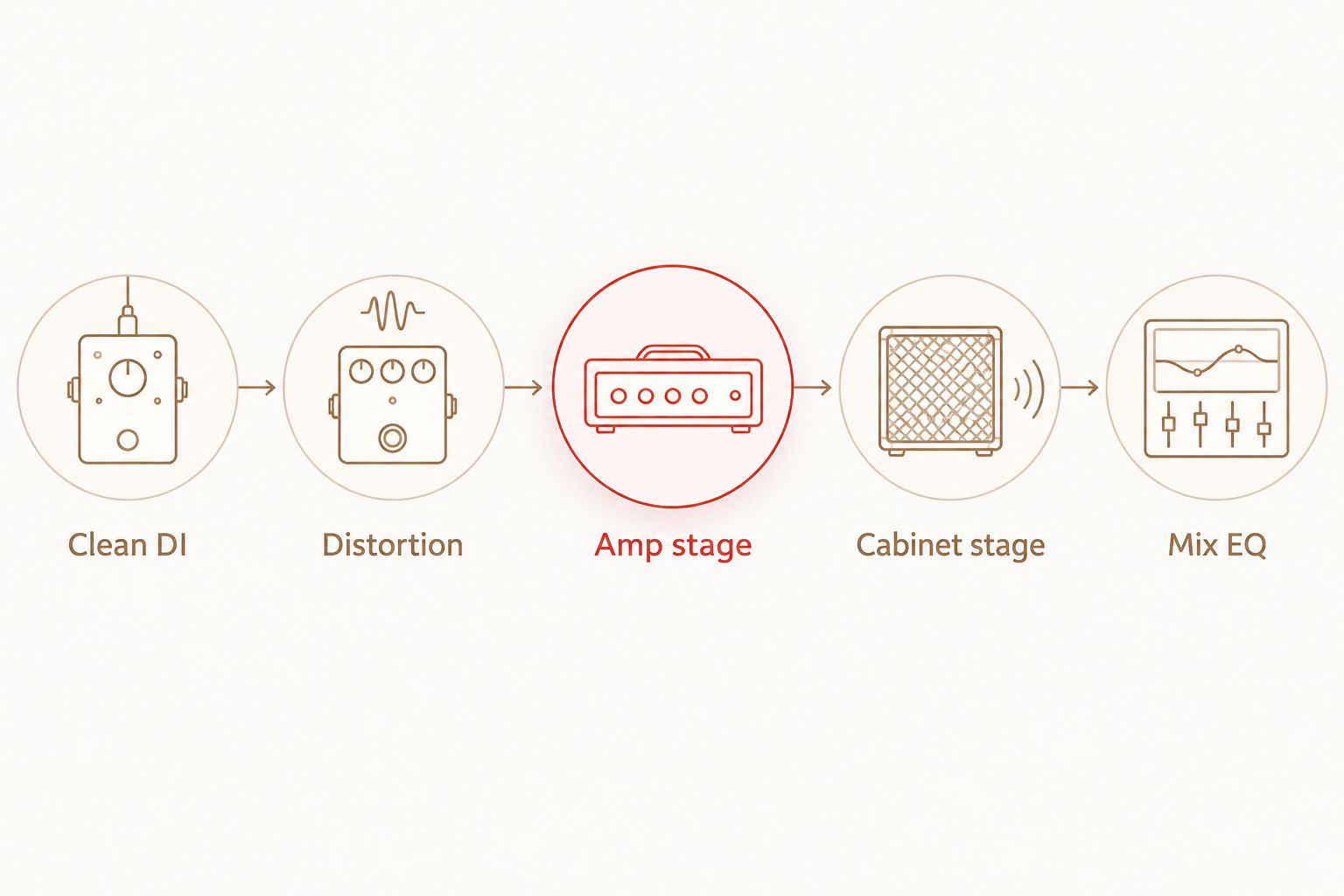
Put GRIMSTAGER in the distortion position for this starting arrangement. Use your existing amp and cabinet processing downstream, and avoid adding another distortion plugin until you have heard what the first stage contributes.
This is a starting workflow, not a claim that every guitar sound requires every stage. If your downstream processor already includes cabinet processing, account for that before inserting a separate cabinet loader.
Follow this sequence:
- Record the clean input. Capture the guitar before the tone-processing inserts so you can revisit the sound without replaying the part.
- Establish the amp-and-cab baseline. Bypass the distortion plugin and make sure the downstream chain produces a usable guitar sound.
- Introduce the distortion. Begin with restrained drive in the chain and listen for the change in attack, sustain and chord detail.
- Match the listening level. Adjust a downstream DAW gain control when comparing bypassed and processed versions.
- Bring in the arrangement. Make the final decision with bass, drums and any second guitar playing.
Do not confuse a louder version with a better version. Level matching makes it easier to hear whether the distortion adds useful texture or simply makes the track more forceful.
The distinction also helps you choose the right tool. Oracle Sound’s black metal distortion plugin changes one part of the chain; its extreme-metal amp simulator addresses the amp-simulator role.


Why black metal tremolo definition varies
GRIMSTAGER’s genre focus makes it relevant, but the complete signal determines what reaches the listener. Check these factors before blaming or praising the distortion stage:
- The recorded performance. Uneven pick depth and accidental string noise enter the chain before any plugin. Listen to the DI when a particular transition keeps sounding blurred.
- Input level. The signal feeding a distortion stage affects how it responds. Keep the recorded input consistent when comparing processing choices.
- Combined distortion. A heavily driven pedal stage feeding a heavily driven amp stage adds successive nonlinear processing. Reduce one stage to identify which contribution you actually want.
- Cabinet processing. The cabinet stage shapes the spectrum after distortion. Compare cabinet choices before using broad EQ changes to rescue the sound.
- Arrangement density. Cymbals, bass and layered guitars share the mix with the tremolo part. Decide which instrument carries the melody rather than forcing every track forward.
- Space effects. Reverb and delay add tails around the picked notes. Bypass those effects while checking the dry riff, then restore the amount the arrangement needs.
For a 2026 production, these checks are more actionable than an unsupported universal preset. A control position without the guitar, input level and downstream chain does not describe a repeatable tone.
How should you set up GRIMSTAGER for tremolo picking?
Start with less combined distortion than you expect to need, then increase it until the riff sustains without losing its changes. Use the controls available in your installed version; the important comparison is the recorded result, not an assumed knob layout.
Loop a representative passage containing both repeated notes and a change of string or chord. A single sustained note tells you little about whether the distortion will preserve the movement in a tremolo riff.
Make the following adjustments in separate passes:
- Distortion pass: compare the baseline with the pedal engaged, leaving the cabinet and mix EQ unchanged.
- Amp pass: adjust the downstream amp’s drive contribution while keeping the pedal stage fixed.
- Cabinet pass: compare the cabinet processing without simultaneously changing distortion.
- Mix pass: restore bass and drums, then judge the guitar at its intended mix level.
Keep the version that communicates the riff, even if another version sounds more dramatic in solo. Distortion that makes the entire passage feel equally dense can weaken the contrast between a repeating figure and its resolution.
Do not use aggressive gating as the first answer to an unclear riff. A gate deals with signal level around its threshold; it does not separate overlapping notes inside a distorted chord.
Where should distortion sit in a direct-recording setup?
For this workflow, place GRIMSTAGER before the amp stage and keep cabinet processing downstream. That arrangement lets you hear how the distortion changes the signal entering the amp rather than treating it as an effect on an already finished guitar sound.
The distinction also applies to guitar pedals for direct recording: deciding what a pedal contributes is separate from deciding how the recording handles the amp-and-cabinet sound. A distortion stage is not automatically the whole direct-recording chain.
Avoid running a physical distortion pedal and a software distortion stage together merely because both are available. Establish a baseline with either stage bypassed, then combine them only when the combined result serves the riff.
For your 2026 template, label the distortion, amp and cabinet stages clearly. If a change makes the guitar harsher or less intelligible, you can return to the responsible stage instead of rebuilding the entire sound.
A useful diagnostic is to bypass processing from the end of the chain backwards. Remove the space effects, then mix EQ, then assess the cabinet and gain stages independently; keep listening levels controlled throughout.
What should you change when tremolo riffs sound blurred?
Change one stage at a time and replay the same DI. Re-recording each comparison introduces performance differences that obscure what the processing changed.
| What you hear | First check | What the comparison tells you |
|---|---|---|
| Chord changes disappear under sustain | Reduce distortion in one gain stage | Whether stacked distortion is obscuring the movement |
| A bright edge dominates the riff | Compare cabinet processing before adding more EQ | Whether the cabinet choice is driving the tonal problem |
| The line works alone but disappears with drums | Listen with cymbals and bass active | Whether the problem belongs to the arrangement rather than the isolated tone |
| Notes end abruptly between phrases | Bypass the gate temporarily | Whether the gate is cutting off the intended decay |
| The processed version always seems preferable | Match output levels | Whether loudness is influencing the decision |
If the dry performance is inconsistent, fix the performance or edit before making the distortion more complicated. If the DI is clear and the processed signal is not, work through the chain before reaching for additional plugins.
Save the original processing state before making changes. A named alternate version gives you a fair comparison and prevents a long adjustment session from replacing a sound that was already doing its job.
Should you double-track a black metal tremolo part?
Double-track when the arrangement needs separate performances across the stereo field, not as a repair for an indistinct original tone. Record another performance rather than duplicating the same audio and expecting a different take.
Listen closely at string changes and phrase endings. Separate performances that disagree at those points can make a fast riff sound less defined, even when each guitar sounds acceptable alone.
For a 2026 session, settle the core distortion and cabinet choices before committing to layers. Then check the combined guitars in mono as well as stereo, with the bass and drums playing.
Keep reverb decisions separate from tracking decisions. A wide, reverberant guitar sound can suit atmospheric material, but it should be an intentional arrangement choice rather than a way to hide an unresolved dry tone.
How do you choose between GRIMSTAGER and SVARTRUNA?
Choose GRIMSTAGER for the distortion-stage job; choose SVARTRUNA for the amp-simulator job. GRIMSTAGER is explicitly a modern black metal distortion plugin, while SVARTRUNA is described as an extreme-metal amp simulator for black metal and death metal.
SVARTRUNA includes nine captured gain stages and three cabinets. Those features describe a broader amp-simulator tool, not proof that it will outperform a separate pedal-and-amp chain on your recording.
There is no need to replace an amp sound that already fits the song. Equally, adding another distortion stage is not the direct solution when you still need an amp-and-cabinet foundation.
Use the product category to narrow the decision, then use your DI recording to judge the musical result. Oracle Sound offers both approaches, so the useful distinction is where each belongs in your session.
FAQ
Is GRIMSTAGER good for black metal tremolo picking?
Yes—GRIMSTAGER is designed as a modern black metal distortion plugin, making it relevant to black metal tremolo parts. Judge its suitability in your full chain by whether the riff’s note and chord changes remain audible.
Is GRIMSTAGER a physical guitar pedal?
No—GRIMSTAGER is a software distortion plugin, not a physical guitar pedal. Its listed plugin formats are VST, AU and AAX.
Does GRIMSTAGER replace an amp simulator?
Treat GRIMSTAGER as a distortion stage rather than an amp-simulator replacement. Its stated product role is modern black metal distortion; build the rest of your recording chain accordingly.
Should I put GRIMSTAGER before my amp sim?
Place GRIMSTAGER before the amp stage as a practical starting point. Keep the cabinet stage downstream and compare the processed sound against the same DI with the distortion bypassed.
Why do my tremolo riffs become unclear with more distortion?
Increasing distortion can make the sustained sound dominate the changes between picked notes. Reduce the contribution of one gain stage at a time and compare at matched listening levels.
Is SVARTRUNA different from GRIMSTAGER?
Yes—SVARTRUNA is an extreme-metal amp simulator, while GRIMSTAGER is a modern black metal distortion plugin. SVARTRUNA’s stated features include nine captured gain stages and three cabinets.
Should I record a clean DI when using GRIMSTAGER?
Yes—recording a clean DI lets you revisit the processing without replaying the part. Capture the input before tone-processing inserts and use the same performance for comparisons.
One last thing
Test the chord change, not just the repeated note. A distortion sound that sustains a single pitch convincingly still has to communicate the moment the riff moves somewhere else.
Keep that transition in your comparison loop. If you can hear the destination clearly with the whole arrangement playing, you have a more useful result than a heavier-sounding solo track that conceals the song.


